Interim & Fractional CTO Engagements
Almaden Technology Advisors delivers interim and fractional CTO engagements for PE-backed software companies in the San Francisco Bay Area. Engineering turnarounds, cloud and vendor cost optimization, and M&A technical due diligence — led directly by a senior operator, not a junior team.
What I Do
Every offering is structured as a clear scope with a fixed fee or defined monthly retainer. No open-ended advisory billing. No junior team handoffs. Every engagement is led directly by me.
Why Engage Me
Proven Results
Services
Every engagement is structured as a defined scope with a fixed fee or transparent monthly retainer. The work begins with understanding the actual problem — not the presenting symptoms — and proceeds with the urgency a PE-backed timeline demands.
Engineering organizations that are failing rarely have a technology problem as the sole root cause. They have organizational and structural problems — misaligned talent, an insufficient management layer, siloed teams, unclear ownership, and cultures that tolerate drift rather than demanding accountability. No technology investment will fix these.
This 6-week engagement produces a written diagnostic of the engineering organization across the dimensions that actually determine performance. The output is a board-ready document and a 90-day transformation plan with owners, milestones, and explicit go/no-go decision points — the kind of artifact you can act on immediately with the existing team, or use as input into a permanent CTO search.
A CTO has departed and the permanent search will take 6–9 months. The company has just been acquired and needs steady technology leadership through integration. A new CEO is reassessing the technology organization and wants an experienced operator in place during the reset. The current technology leader is being transitioned out and the company needs continuity while a successor is identified.
In each of these situations, the company doesn't need an advisor — it needs an operator running the technology organization day to day, reporting to the CEO, and making the calls that need making. That includes the difficult personnel and architectural decisions that get postponed when no one has clear authority. The goal of every interim engagement is to hand over a stronger organization than I inherited.
Cloud and vendor spend has a tendency to compound quietly. Architectural decisions made for one workload outlive the workload itself. SaaS subscriptions accumulate. Contracts auto-renew. License pools sit underutilized. The result is a cost base that has grown faster than the business value it supports — and which often carries 15–25% in recoverable waste that no one has had the structured time to surface.
This 4-week engagement produces an itemized optimization plan with estimated annual savings per recommendation, prioritized by ROI and implementation effort. The deliverable includes a 90-day capture roadmap with owners and milestones, and a summary view suitable for the board or PE sponsor. Typical ROI is 10–20x on the engagement fee within the first year.
Most technical due diligence is performed by consulting analysts who have never run an engineering organization. They surface documented issues but miss the structural problems that make integrations fail — the cultural mismatches, the management layer weaknesses, the architectural decisions that look reasonable on paper but quietly burn 18 months of velocity post-close.
This engagement delivers operator-led technical due diligence for PE firms and strategic acquirers. The assessment is built around the realities of post-close integration: what an operator will actually need to fix in year one, what the deal model should account for, and where the integration plan will meet resistance. The deliverable is structured for the deal team, not the data room.
About
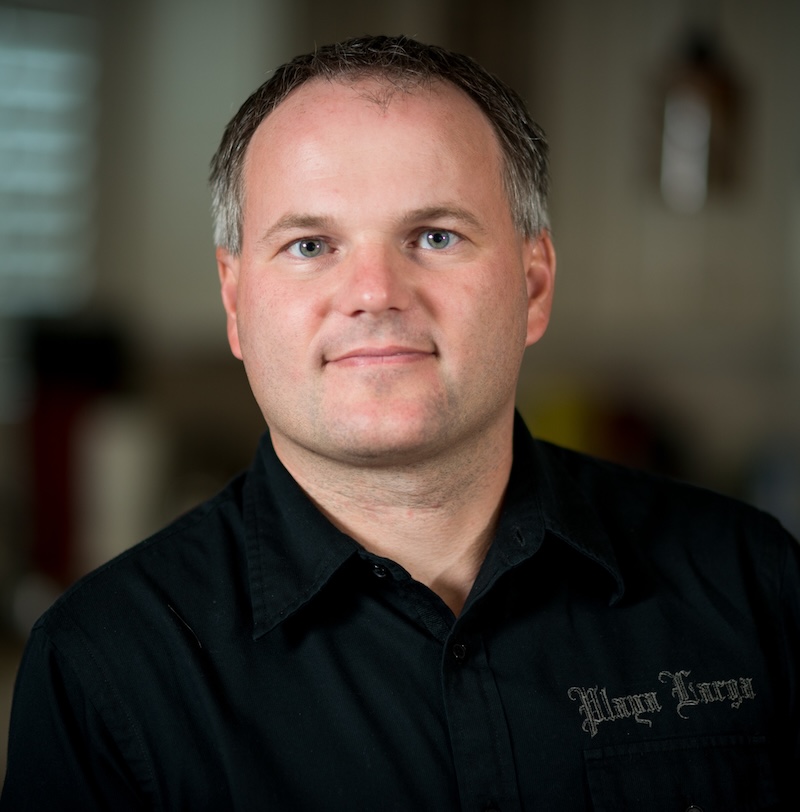
Almaden Technology Advisors (ATA) is a solo practice. Every engagement is delivered directly by me — Vadim Iofis — with no junior associates, no team handoffs, and no senior partner who sells the work and disappears.
I started ATA in 2026 to focus exclusively on interim and fractional CTO engagements at PE-backed software companies. The premise is simple: technology organizations that are failing are almost never failing because of technology. They are failing because of organizational and structural problems that no technology investment will fix on its own. Fixing them requires someone who has done this work directly, not someone synthesizing best practices from the outside.
Twenty years of operating experience inform every engagement. Most recently, as Head of Technology at a Berkshire Hathaway portfolio company, I led the engineering organization turnaround documented in the case studies section. Earlier, as VP of Engineering at Perforce Software under Clearlake Capital, I scaled engineering from 6 to 65 people through a high-growth, post-acquisition phase. Before that, leadership roles at Ooyala, HP, VMware, and Yahoo!
"When you engage me, you get me — directly. No junior team, no slide-deck handoffs, no expanding scope. Every engagement is time-boxed, fixed-fee, and led personally."
ATA is deliberately structured around four named offerings — each with a defined scope, timeline, and fixed fee or transparent retainer. There is no open-ended advisory billing and no "let's see where this goes" engagement model. You know what you are buying and what it will cost before the work begins.
The number of concurrent clients is intentionally limited. Each engagement gets the full depth of attention the work requires. When I make a recommendation, I stay to help implement it — because the gap between a recommendation and its execution is where most consulting value evaporates. Navigating internal friction, maintaining stakeholder trust through difficult organizational change, and holding the work to a measurable standard of success is where the actual value lives.
I work primarily with PE-backed and mid-market B2B software companies in the San Francisco Bay Area and beyond. Typical company size: 150 to 1,500 employees. Primary sectors: SaaS and cloud software, fintech, healthtech, enterprise software, and digital media — industries where engineering performance directly drives business outcomes, and where structural dysfunction in technology has an immediate and visible cost.
Engagements are most impactful at inflection points: a CTO transition, a post-acquisition integration, a new CEO reassessing the technology organization, a financing event requiring fast operational improvement, or a PE-backed timeline demanding measurable EBITDA contribution from the technology function.
ATA is headquartered in the San Francisco Bay Area — home to one of the densest concentrations of PE-backed software companies in the world. Being local matters: I am available for on-site engagement, embedded in the ecosystem, and able to operate with the rhythm a PE-backed timeline demands. That proximity is a deliberate choice, not a limitation.
Case Studies
Every engagement is different. The root causes vary, the organizations vary, the industries vary. What doesn't vary is the standard I hold the work to: specific, measurable outcomes that justify the investment.
A 500-person Berkshire Hathaway portfolio company in the enterprise media and regulatory disclosure space had a technology organization spanning Engineering, Infrastructure/SRE, Information Security, Product Management, and Corporate IT that had accumulated years of structural dysfunction. Critical projects had been in development for up to seven years without shipping. Production incidents were frequent. Security posture was weak, with recurring audit findings. Costs were poorly controlled. Leadership had lost confidence in the technology team's ability to deliver.
An independent diagnostic identified four root causes driving the dysfunction:
Rather than addressing symptoms, the engagement restructured the organization around the root causes. The engineering department was rebuilt around principal-level technical leads embedded in each team. A structured job matrix was introduced to give managers a consistent tool for evaluating skill levels, performance, and career progression. A formal talent review process, including calibrated 9-box evaluations, was instituted to create accountability and visibility at the leadership level. Underperforming managers and engineers were transitioned out with care and clarity. The software development lifecycle was redesigned to establish shared standards for quality and delivery across teams.
| Project delivery | Business-critical projects shipped that had been stalled in development for up to 7 years |
| Platform modernization | First major customer-facing platform modernization completed in under 12 months |
| Production reliability | 75% reduction in production incidents through improved observability and incident management |
| Cloud infrastructure | 35% reduction in AWS spend through architectural optimization and cost controls |
| Security & compliance | 80%+ reduction in IT audit findings; recurring compliance risks eliminated |
| Vendor spend | $1.75M in annual savings through procurement rationalization |
The outcomes required more than accurate diagnosis. Restructuring a management team, replacing underperforming personnel, and changing how an organization measures itself generates significant internal friction. Maintaining trust with senior leadership while delivering difficult assessments — and maintaining working relationships with the team being restructured — required sustained stakeholder navigation throughout the engagement. The recommendations were only as valuable as the organization's willingness to act on them, and that willingness had to be earned and maintained over time.
A PE-backed enterprise software company had accumulated years of structural dysfunction in its IT procurement function. The problems were not the result of any single decision — they were the compounded outcome of procurement made in isolation, without architectural oversight, without utilization accountability, and without a structured process for ongoing review. The cost was significant and growing.
Four patterns of waste were driving the overspend:
The root cause underlying all four patterns was the same: procurement had no structured process for auditing IT spend, no reliable communication channel with engineering and IT managers, and no mechanism for surfacing issues with sufficient lead time to act before contract renewals. Problems were occasionally raised — but always too late to change course. The dysfunction was systemic, not incidental.
The engagement began with a comprehensive audit of all vendor contracts and a full inventory of software licenses against actual utilization data. For each identified issue, a specific and actionable proposal was developed: cancellation of confirmed shelfware, replacement of over-specified platforms with right-sized alternatives, substitution of out-of-support products with modern equivalents, and license count rationalization aligned to actual usage.
Recommendations were then worked through directly with IT department leaders — not presented and handed off. Each approved action was planned and executed as a discrete project with clear ownership and timelines. In parallel, a structured procurement review process was established: a formal license audit cadence, clear communication protocols between procurement and engineering managers, and renewal calendars with sufficient lead time to evaluate, negotiate, or exit contracts before auto-renewal locked in another year of unnecessary spend.
| IT procurement spend | 20%+ reduction in total annual IT procurement costs through eliminations, replacements, and renegotiations |
| Shelfware eliminated | All undeployed and unconfirmed software contracts identified and cancelled |
| Platform right-sizing | Over-specified enterprise platforms replaced with appropriately scaled alternatives at materially lower cost |
| Support cost reduction | Out-of-support deployments modernized, eliminating custom vendor support fees |
| Process infrastructure | Structured procurement review process established, preventing recurrence of the same patterns |
The savings were real, but the more durable outcome was structural. Organizations that fix procurement problems without fixing the process that created them will reproduce the same waste within two or three renewal cycles. Establishing a reliable audit cadence and a functioning communication channel between procurement and technical leadership meant the company was positioned to maintain the gains — not just capture a one-time reduction and drift back toward the same patterns.
More Case Studies
Additional case studies will be published as ongoing engagements are completed.
Discuss Your SituationContact
Most engagements begin with a straightforward conversation about what's not working and why. There's no obligation, no sales process, and no junior associate on the call. Just a direct discussion about whether this is the right fit for your situation.
This works best with CTOs, CEOs, COOs, CFOs, and PE operating partners at PE-backed and mid-market B2B software companies who are willing to hear difficult truths, act on clear recommendations, and hold their organizations accountable to measurable outcomes.
If your engineering organization is not performing at the level your business requires — or if you are navigating a CTO transition, a post-acquisition integration, or a pre-acquisition technical assessment — this is the right conversation to have.
An initial conversation typically runs 30 minutes. I'll ask about your current situation, what you have already tried, and what success would look like. If there's a fit, I'll outline a proposed engagement structure and fixed fee before any commitment is made.
A 30-minute discussion about your current situation, what's working, and where the friction is. No preparation required.
If there's a fit, I'll send a one-page proposal with engagement structure, timeline, and fixed fee — before any commitment is made.
Most engagements can begin within two weeks of agreed scope. Interim CTO engagements typically start within a week when timing is critical.
Every engagement is led directly by me — no handoffs, no junior team, no expanding scope. Time-boxed and fixed-fee from start to finish.